Petoskey Stone: Michigan's State Stone
A 350-Million-Year-Old Piece of Michigan's History
Few stones are as closely associated with Michigan as the Petoskey stone.
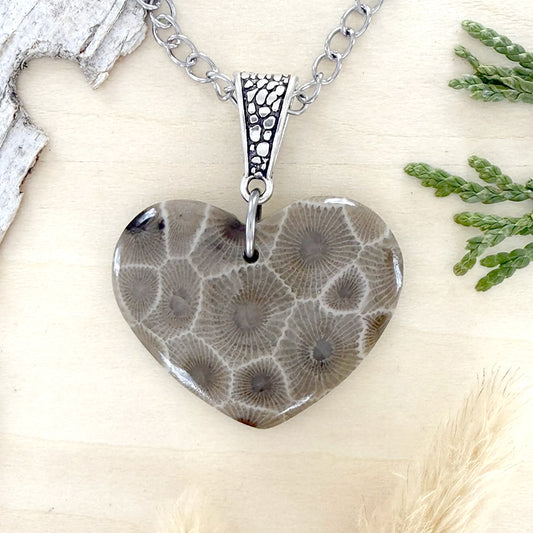
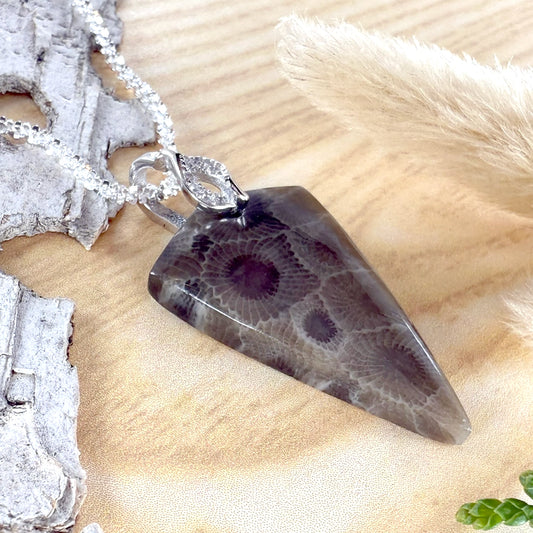
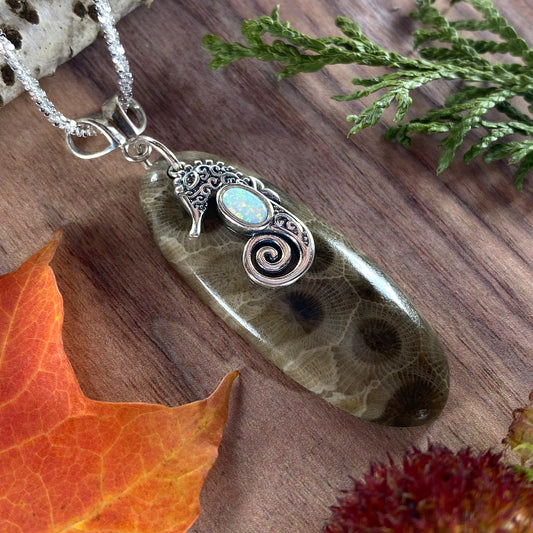
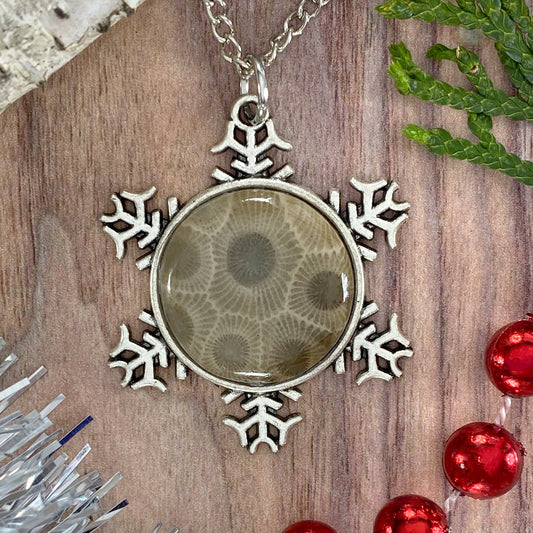
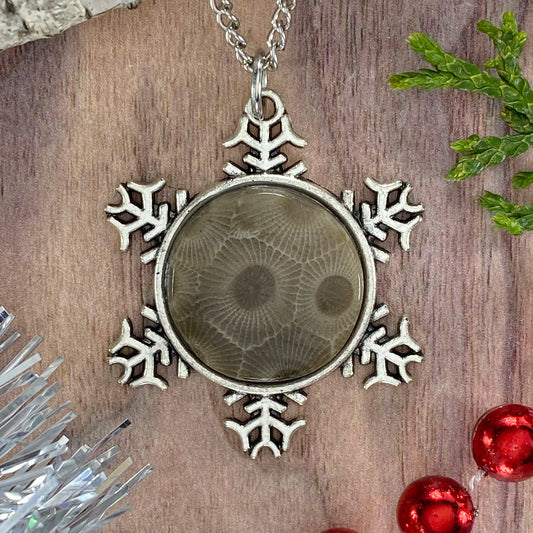
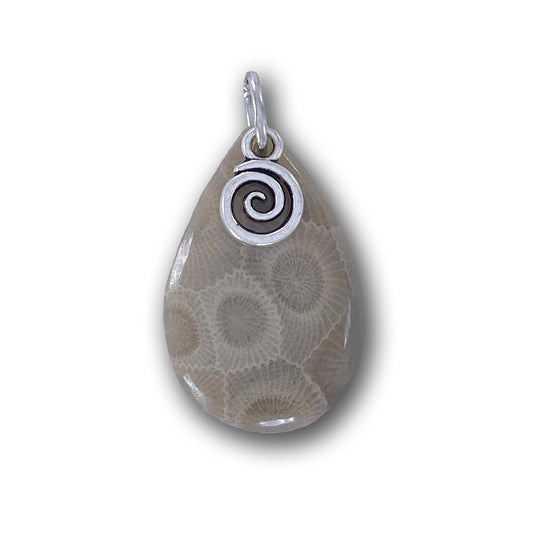
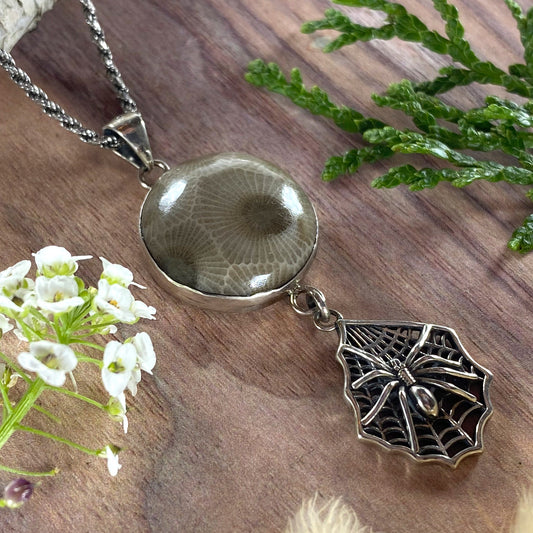
With its distinctive pattern of tightly packed fossilized coral cells, a polished Petoskey stone looks almost like a honeycomb or a collection of tiny flowers. But those beautiful patterns are actually the fossilized remains of an ancient coral that lived hundreds of millions of years ago.
Today, Petoskey stone is Michigan's official state stone and one of the most treasured natural discoveries found along the Great Lakes shoreline.
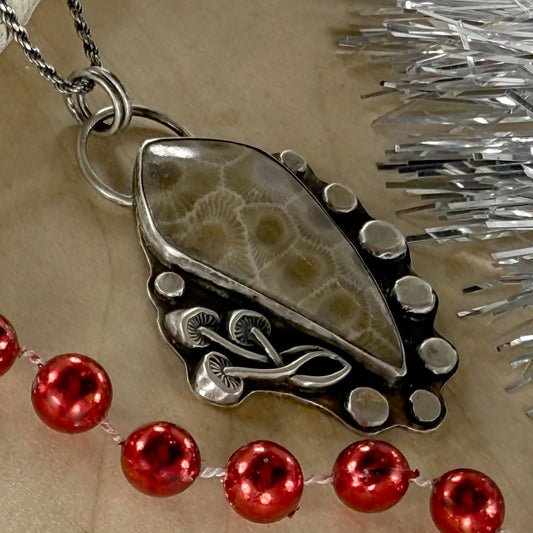
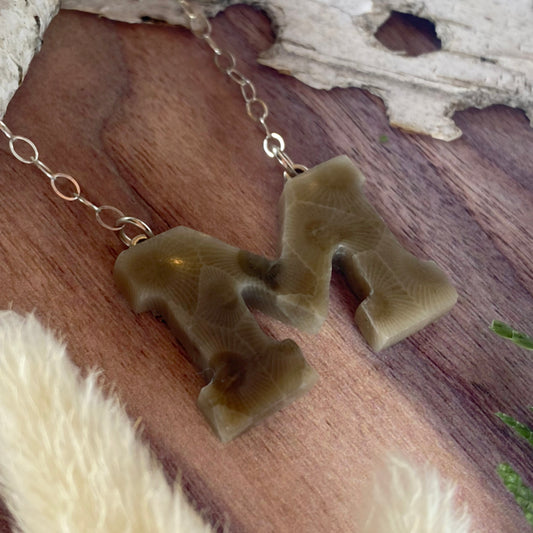
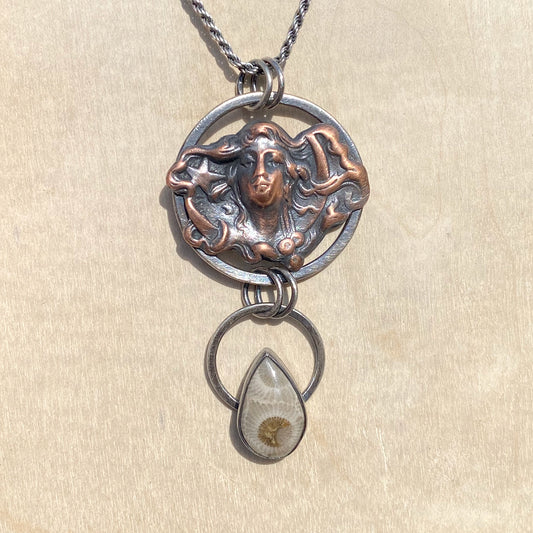
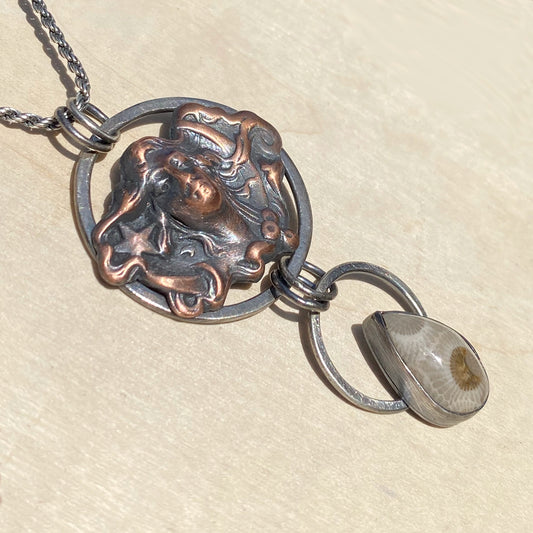
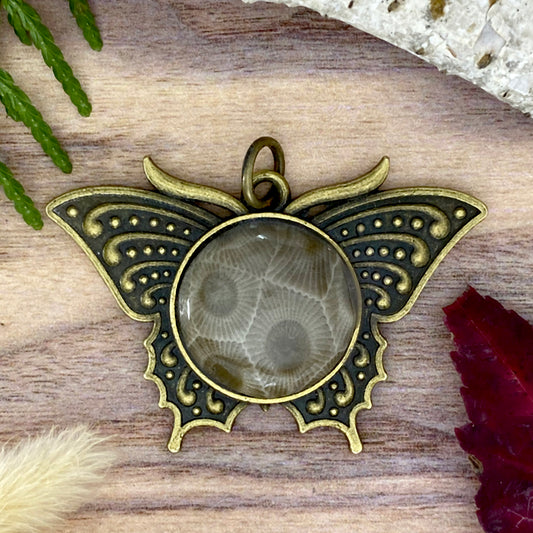
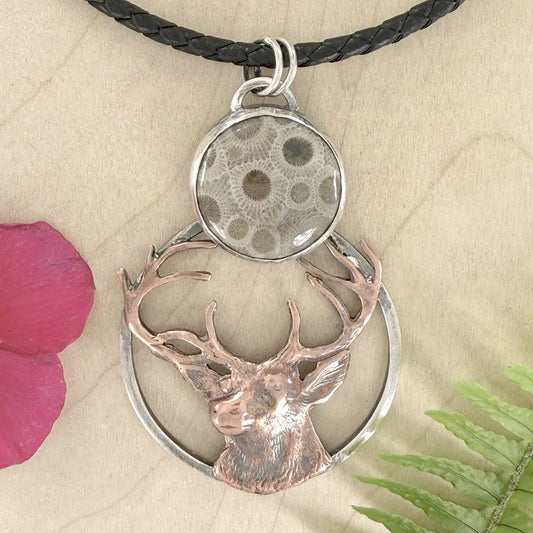
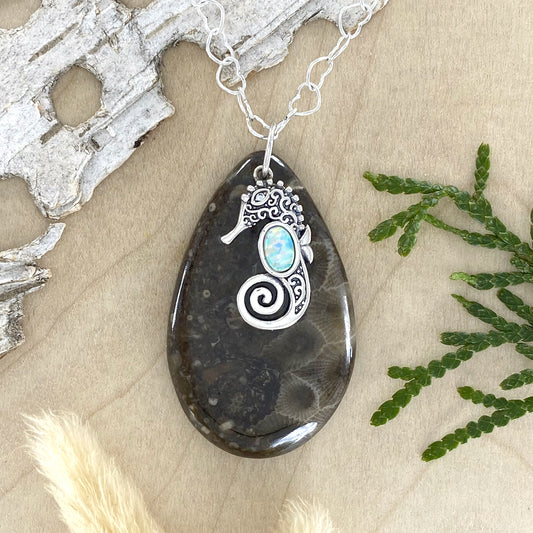
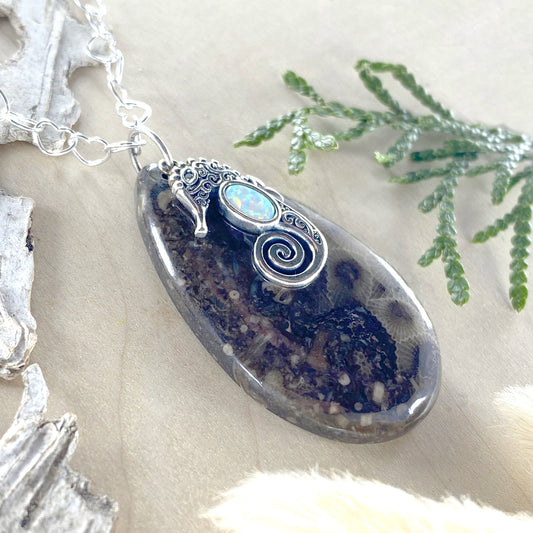
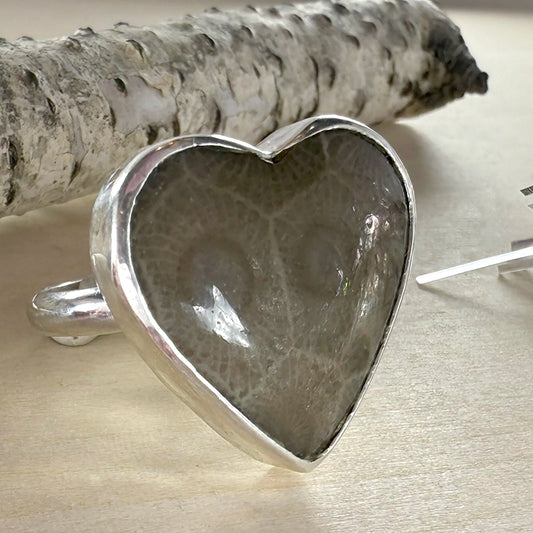
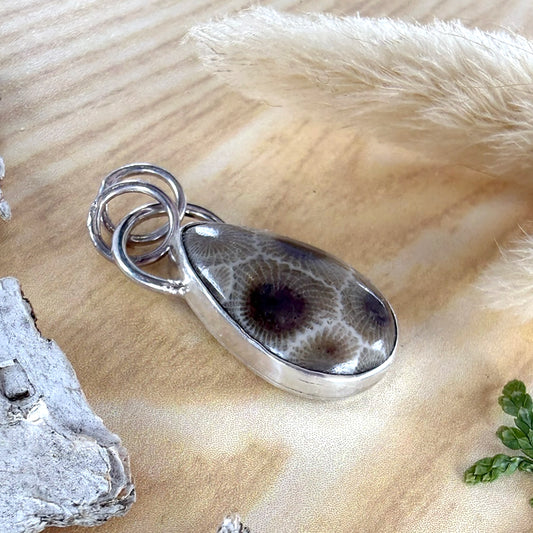
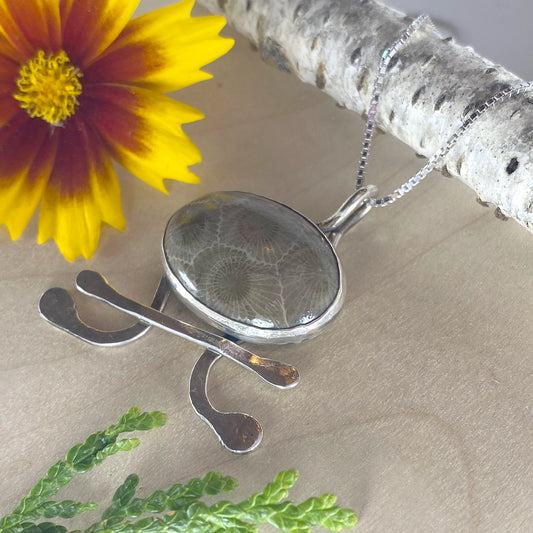
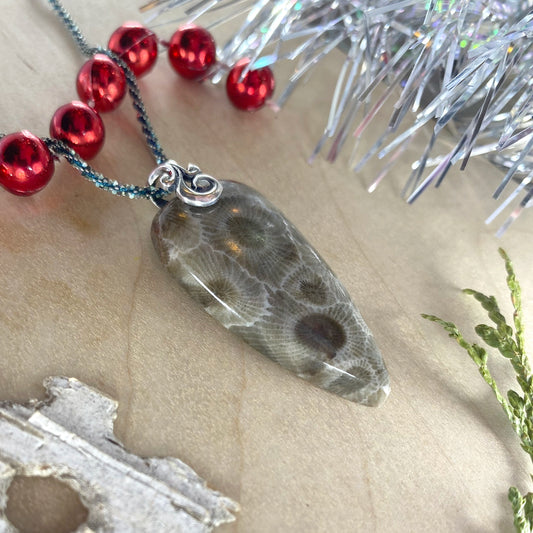
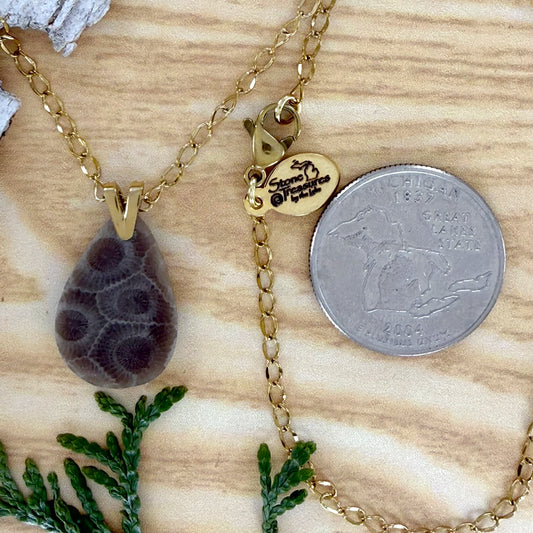
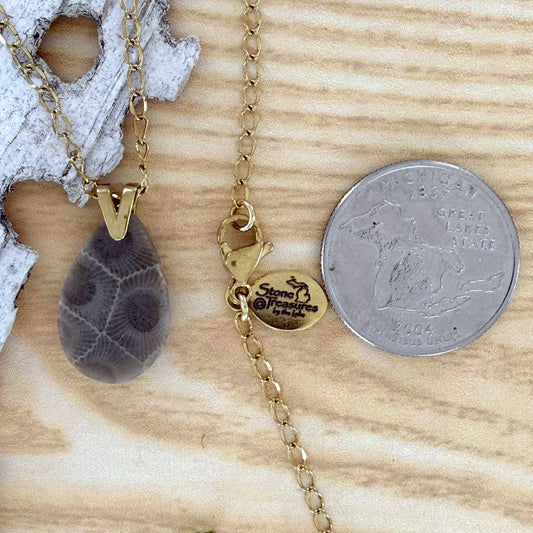
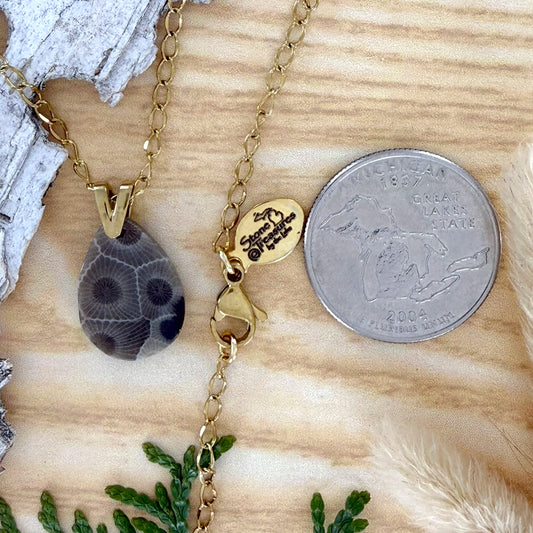
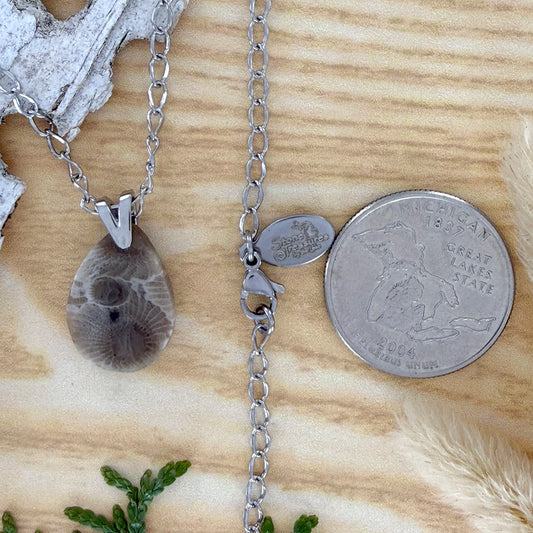
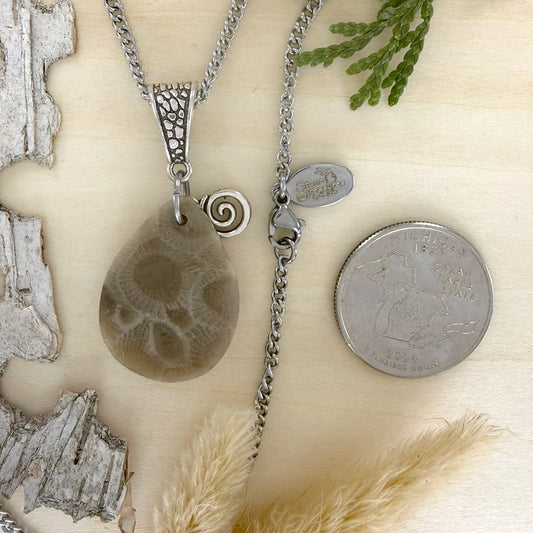
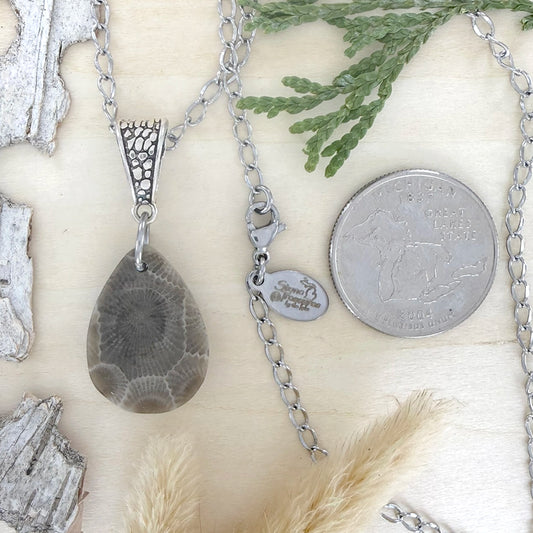
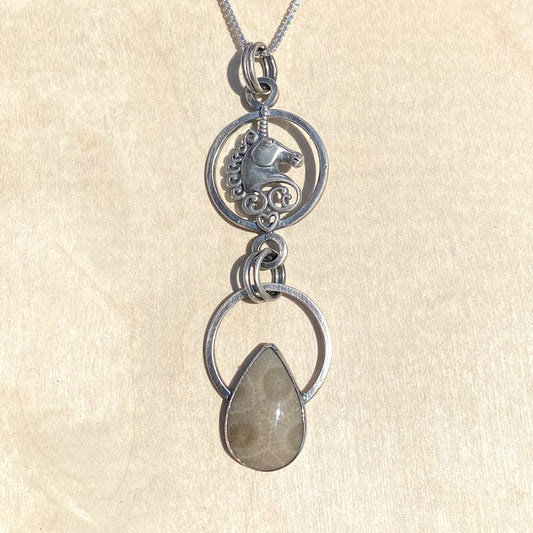
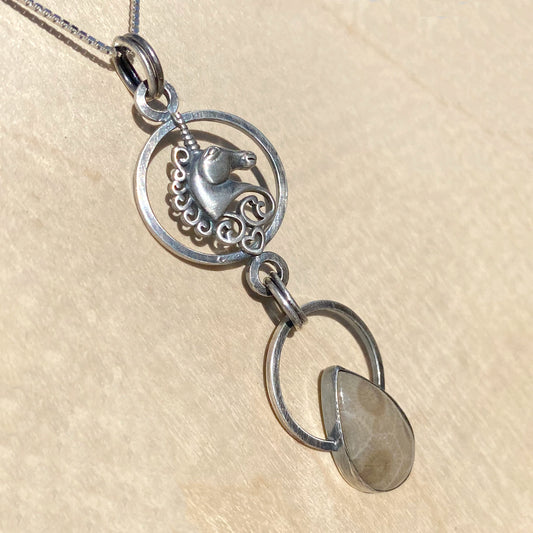
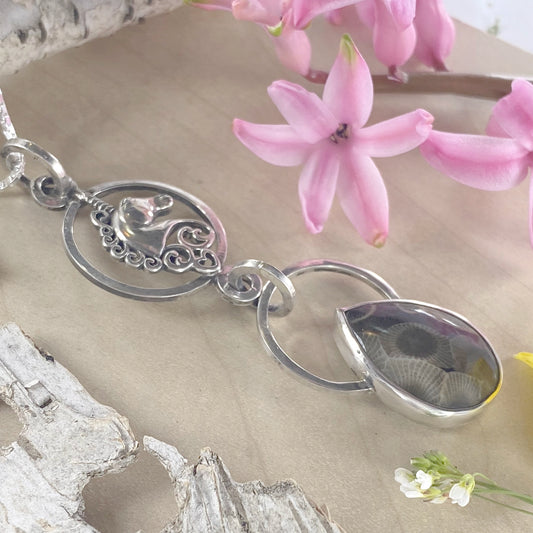
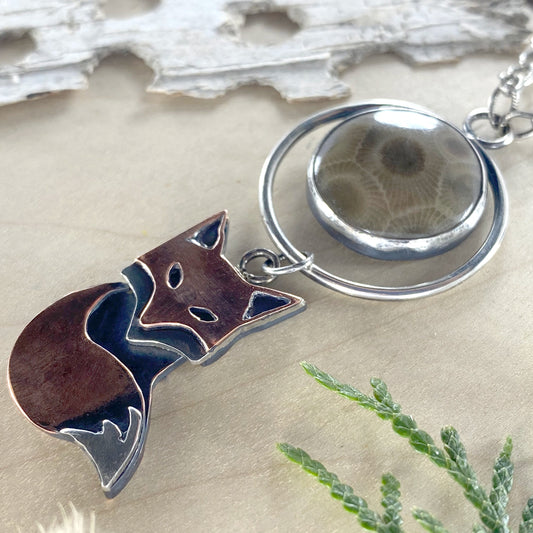
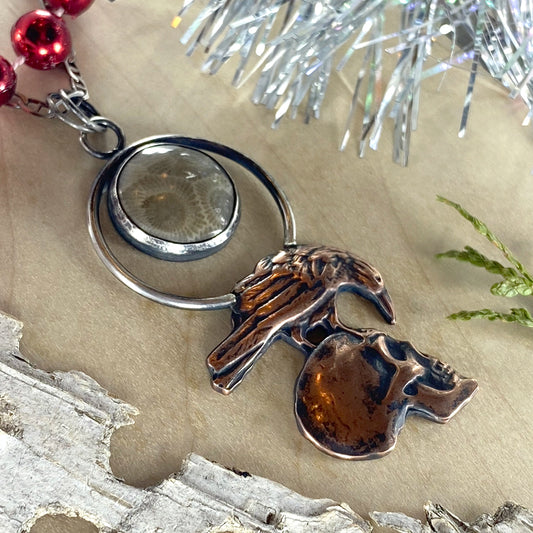
At Stone Treasures by the Lake, we love transforming these ancient Michigan fossils into one-of-a-kind jewelry and cabochons that allow you to carry a little piece of the Great Lakes with you.
What Is a Petoskey Stone?
A Petoskey stone is a fossilized piece of ancient colonial coral, commonly identified as Hexagonaria.
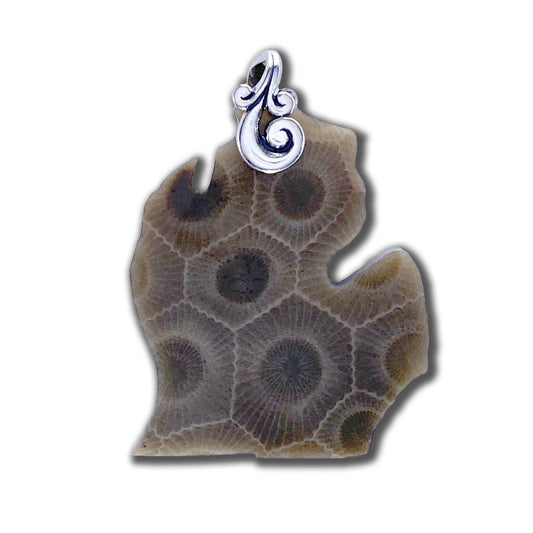
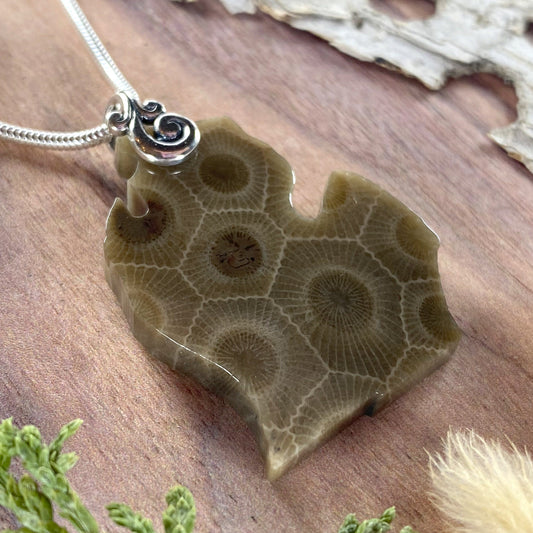
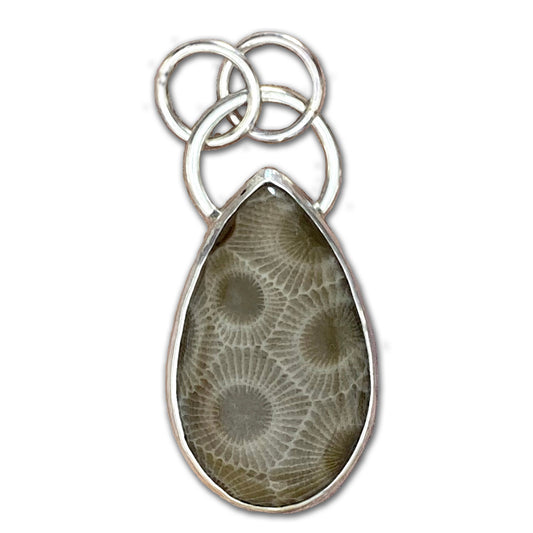
The distinctive pattern comes from the individual coral colonies, called corallites. Each small hexagonal structure represents part of the ancient coral colony.
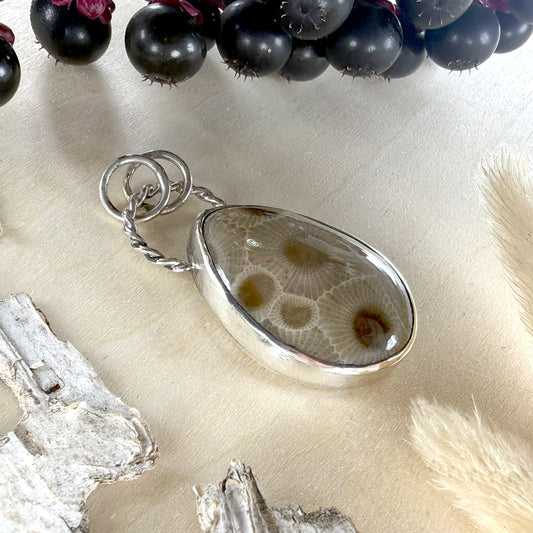
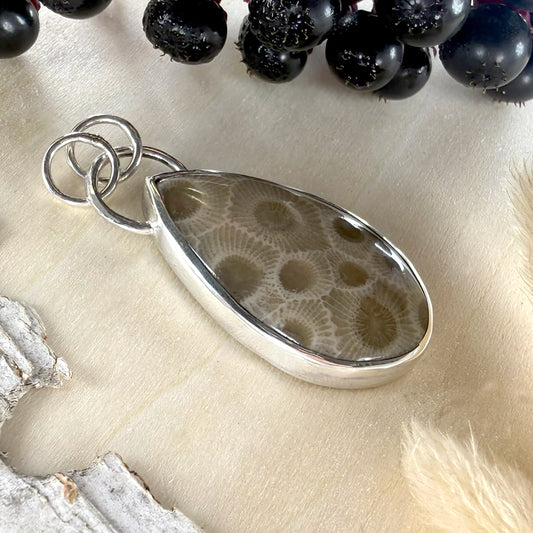
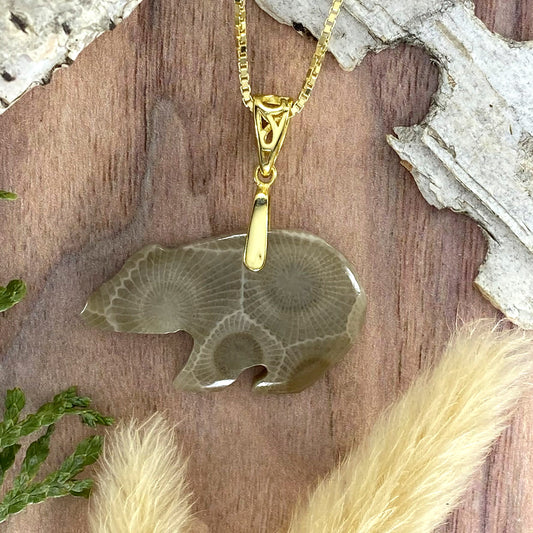
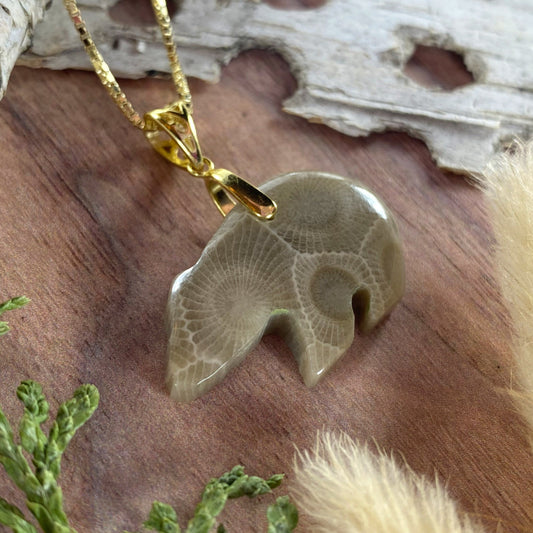
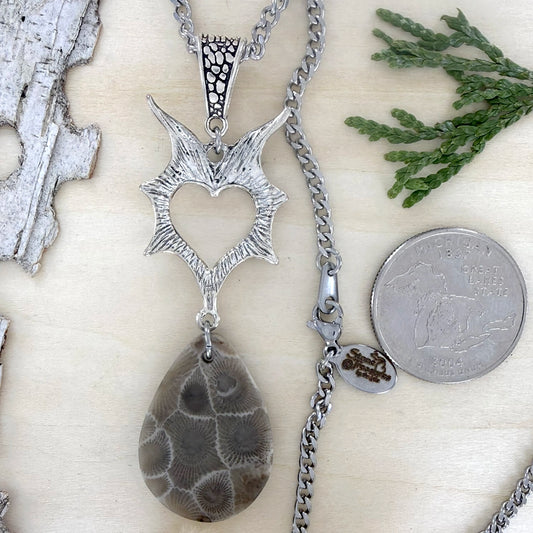
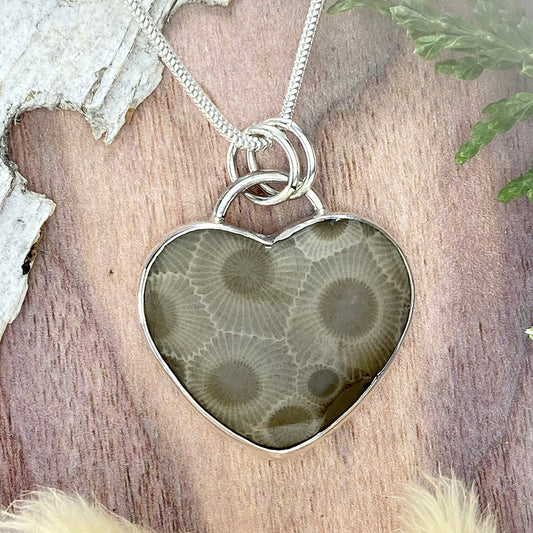
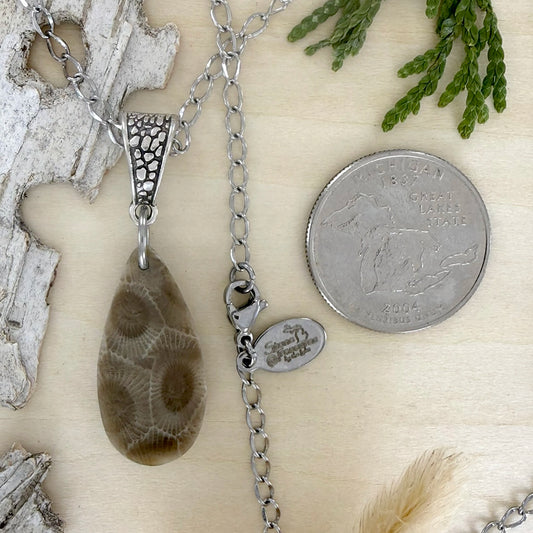
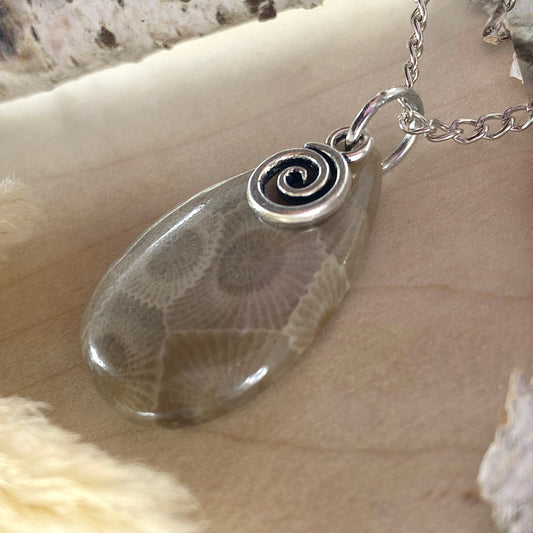
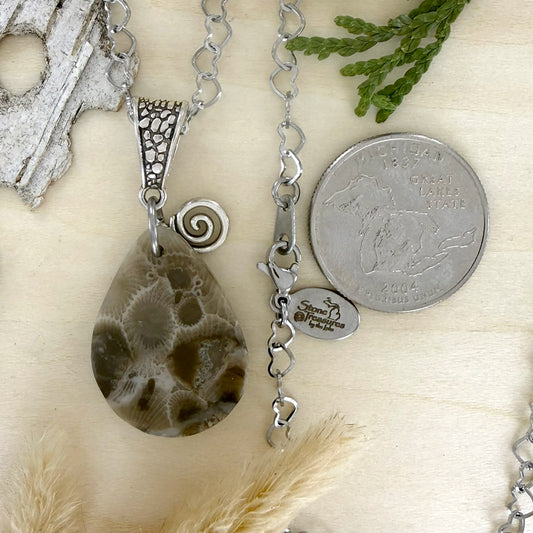
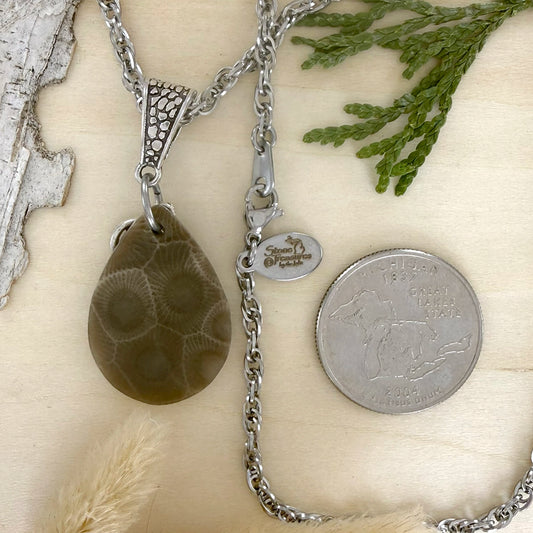
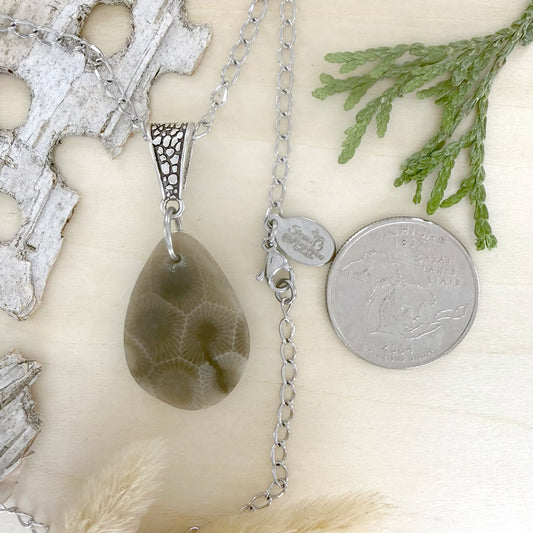
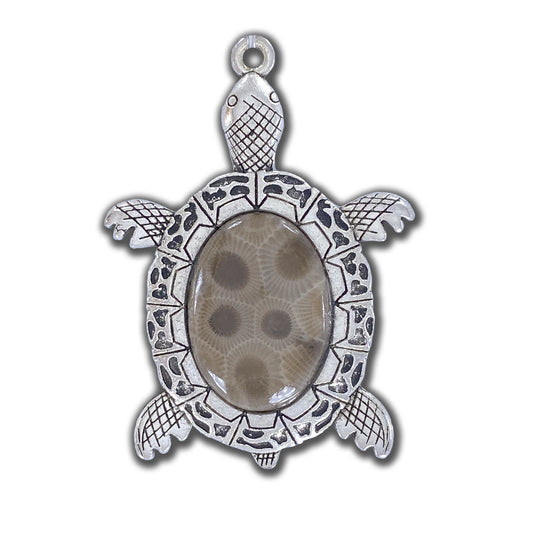
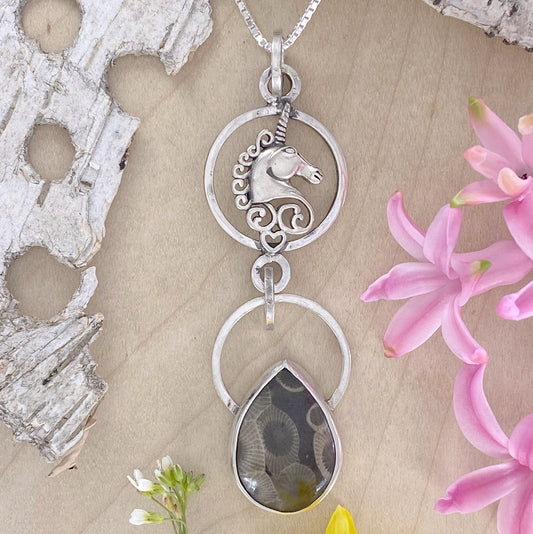
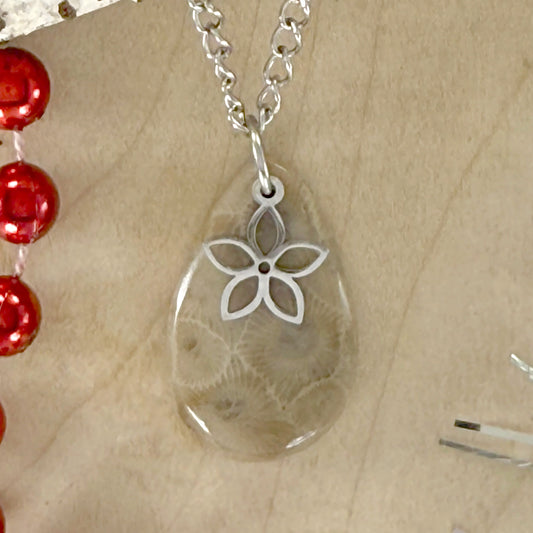
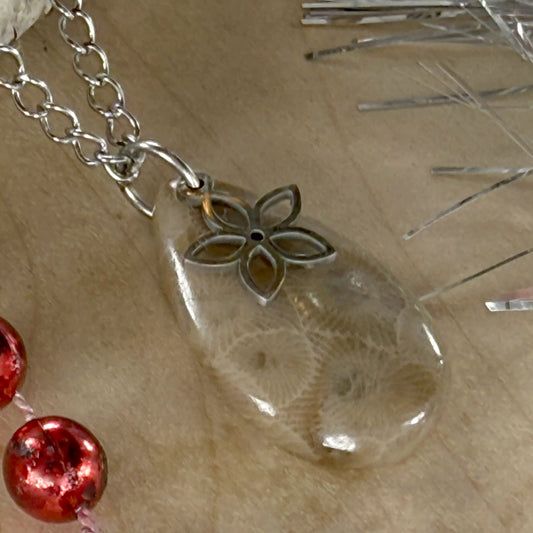
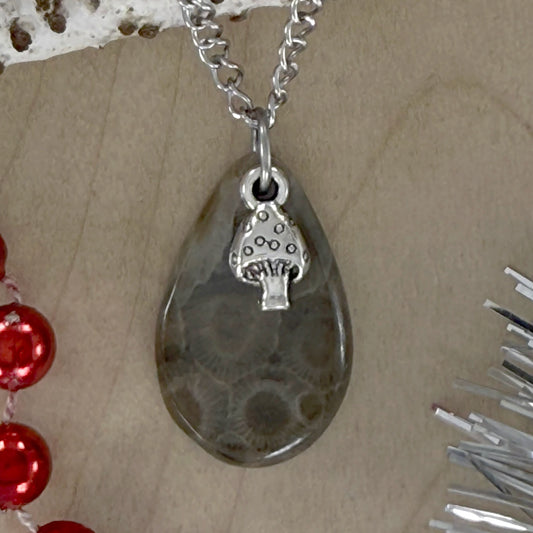
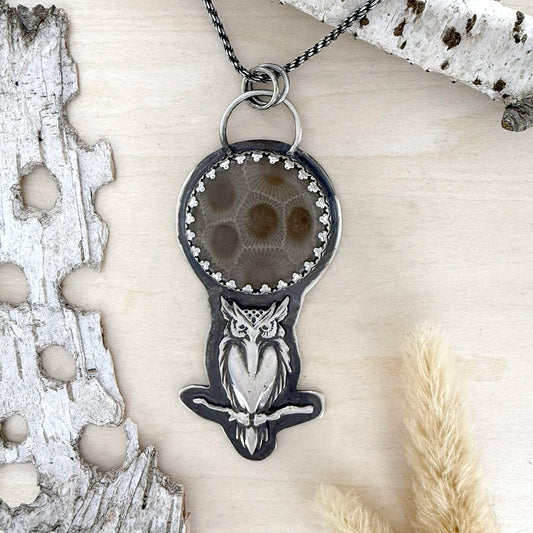
When the stone is wet or polished, the fossil pattern becomes especially visible, revealing the characteristic circles, hexagons and radiating lines that make Petoskey stone so recognizable.
Michigan's Department of Environment, Great Lakes, and Energy identifies Petoskey stone as a fossil colonial coral found in Devonian-age rocks of Michigan's Traverse Group.
How Old Is a Petoskey Stone?
Petoskey stones formed approximately 350 million years ago during the Devonian Period.
At that time, the area that is now Michigan was part of a warm marine environment. Ancient coral colonies lived in these shallow seas, building large reefs.
Eventually, the coral died and was buried. Over immense spans of geological time, the coral structures became fossilized.
Michigan's official geological resources describe Petoskey stones as fossilized coral dating to the Devonian Period, roughly 350 million years ago.
That means every genuine Petoskey stone is a tiny piece of a world that existed long before dinosaurs appeared.
Why Does Petoskey Stone Have a Honeycomb Pattern?
The famous Petoskey pattern comes from the fossilized structures of the ancient coral colony.
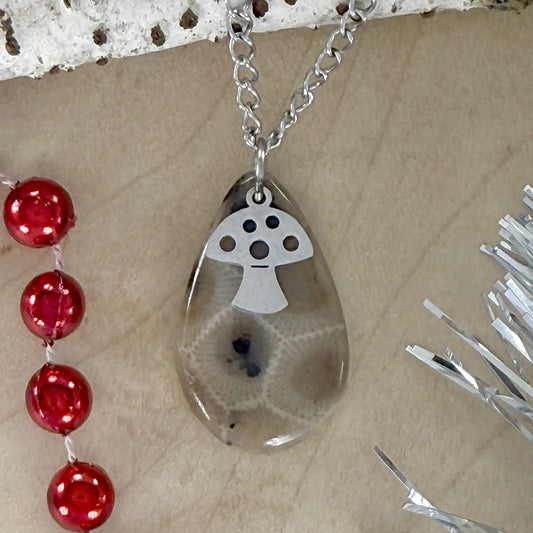
When you look closely at a polished stone, you can see repeated shapes with darker centers and radiating lines.
These structures were once living coral.
The individual coral structures are called corallites, and their repeated geometric arrangement creates the pattern that makes Petoskey stones so recognizable.
The pattern can range from extremely sharp and well-defined to soft and subtle depending on the individual stone and how it has weathered or been polished.
How Did Petoskey Stones Get to Michigan's Beaches?
Petoskey stones are found in many parts of Michigan, particularly along the shorelines of northern Lower Michigan.
Glaciers played an important role in distributing these ancient fossils.
During the Ice Age, enormous glaciers moved across Michigan, breaking pieces of fossil-bearing rock loose and transporting them across the landscape.
As the glaciers retreated, they left the stones behind.
Wave action along Michigan's Great Lakes shorelines then continued to wear and round many of the stones.
Michigan's geological resources note that glaciers distributed Petoskey stones to many areas of the state, while wave action continues to shape stones found along the shoreline.
Where Can You Find Petoskey Stones?
Petoskey stones are particularly associated with the northern Lower Peninsula of Michigan.
They can be found along portions of the shorelines of:
- Lake Michigan
- Lake Huron
- Inland Michigan lakes
- Rivers and gravel deposits
- Inland areas where glacial deposits occur
Michigan's official resources note that Petoskey stones are found in numerous locations beyond the immediate Petoskey area, including farther south along the Lower Peninsula.
When Is the Best Time to Look?
Spring can be an especially productive time for beachcombing because winter storms, ice and wave action can expose new stones.
After storms or periods of rough water, newly uncovered stones may be easier to spot along the shoreline.
How Do You Identify a Petoskey Stone?
Look for these characteristics:
1. The distinctive fossil pattern
The most recognizable feature is the repeating pattern of fossilized coral cells.
2. Hexagonal or polygonal shapes
Individual corallites often appear as tightly packed geometric structures.
3. A central "eye"
Many individual fossil structures have a darker center surrounded by radiating lines.
4. Gray, tan or brown coloration
Petoskey stones commonly range from grayish to brownish or buff tones, although individual stones can vary.
5. A pattern that becomes clearer when wet
A dry stone may look relatively plain, while water can dramatically reveal the fossil pattern.
6. A polished surface
Polishing brings out the contrast and detail of the fossilized coral.
Petoskey Stone vs. Charlevoix Stone
Petoskey stones are sometimes confused with Charlevoix stones, another fossil coral found in Michigan.
They can look similar, but their fossil structures and patterns differ.
Charlevoix stones generally have smaller, more tightly packed structures with a honeycomb-like appearance. Michigan's tourism information provides additional guidance for distinguishing the two.
Why Is Petoskey Stone Michigan's State Stone?
Michigan officially designated Petoskey stone as its state stone in 1965.
Its connection to Michigan is deeply rooted in the state's geology, Great Lakes shorelines and beachcombing culture.
For generations, people have searched Michigan beaches for these unusual fossils, turning the hunt itself into part of the Michigan experience.
A Petoskey stone isn't simply a pretty rock.
It represents:
Michigan.
The Great Lakes.
Ancient life.
The shoreline.
And millions of years of geological history.
Why Are Petoskey Stones So Special?
Every Petoskey stone has its own pattern.
Some have bold, sharply defined fossil structures. Others have subtle patterns that emerge only when the stone is wet or polished.
The size, color, shape, weathering and fossil pattern can all vary.
That means two pieces of genuine Petoskey stone will never be exactly alike.
That's one reason we love working with them.
Petoskey Stone Jewelry
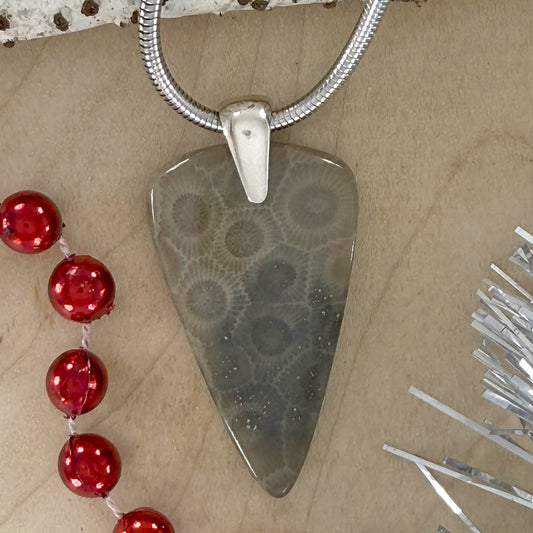
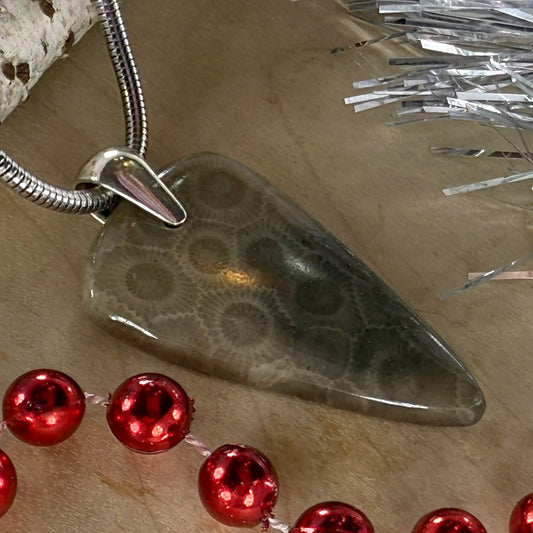
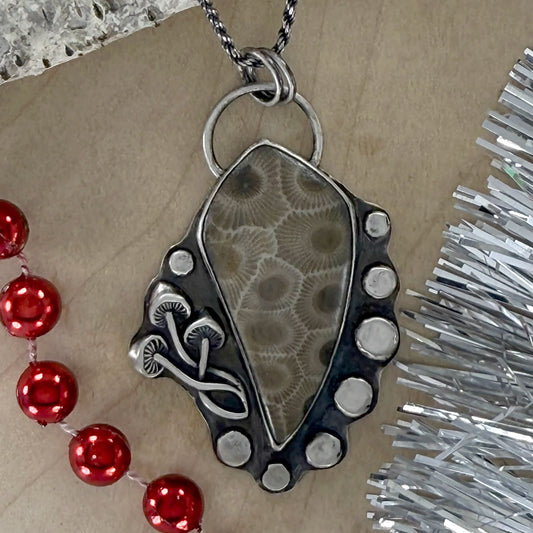
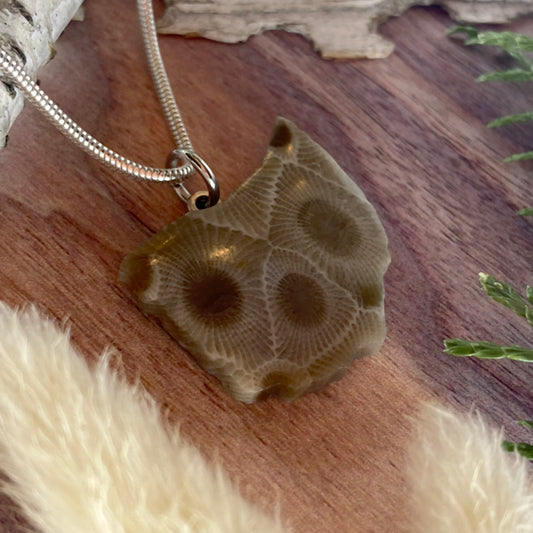
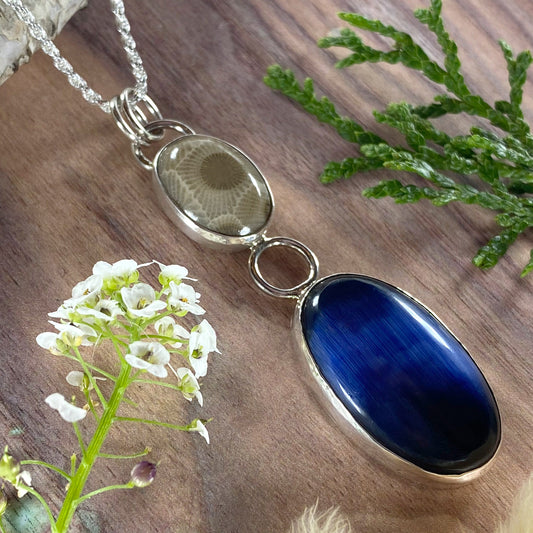
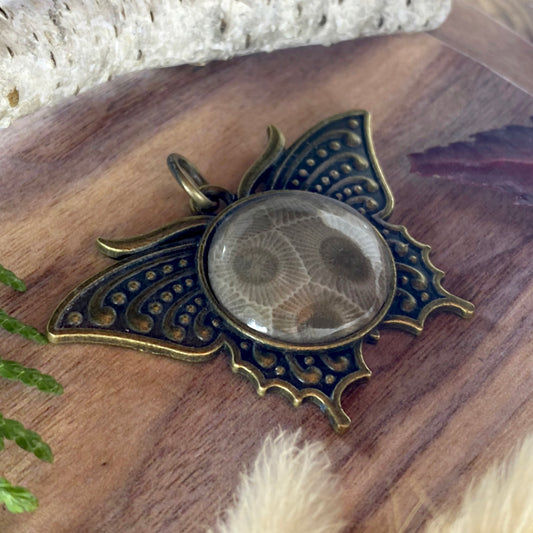
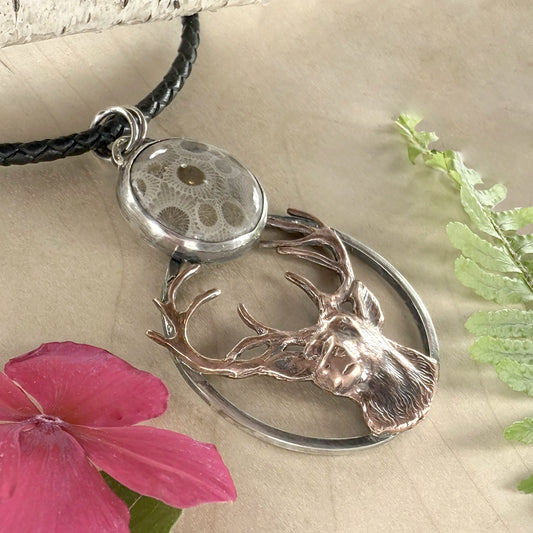
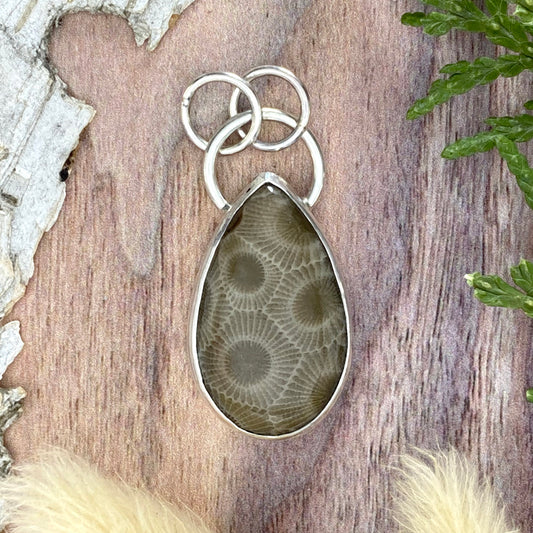
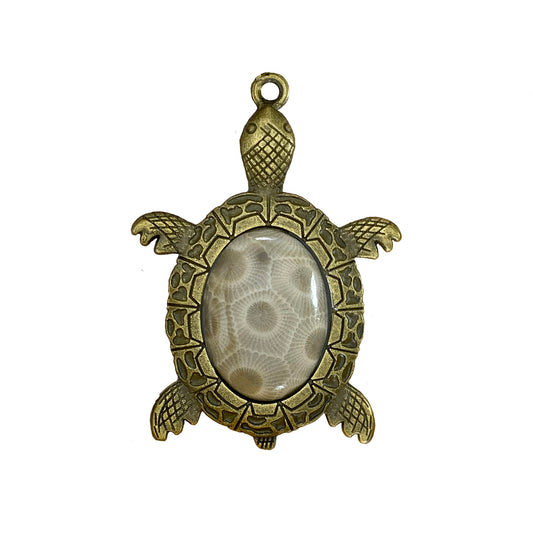
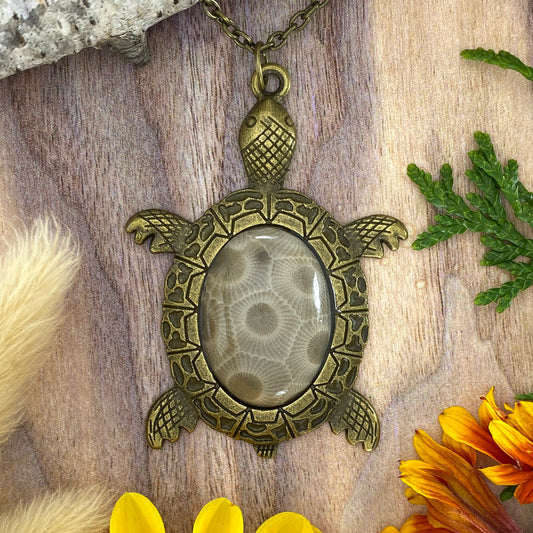
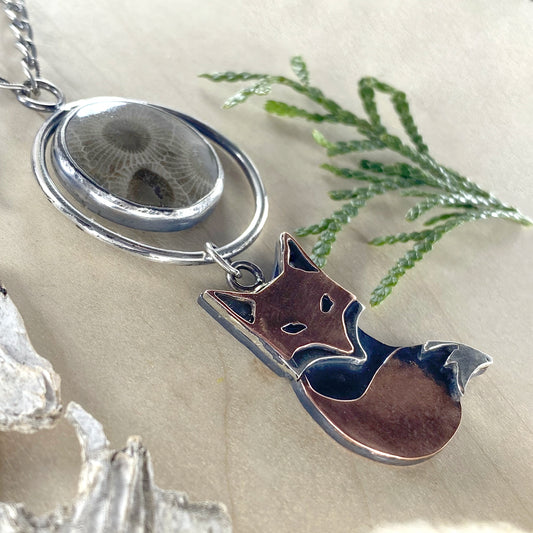
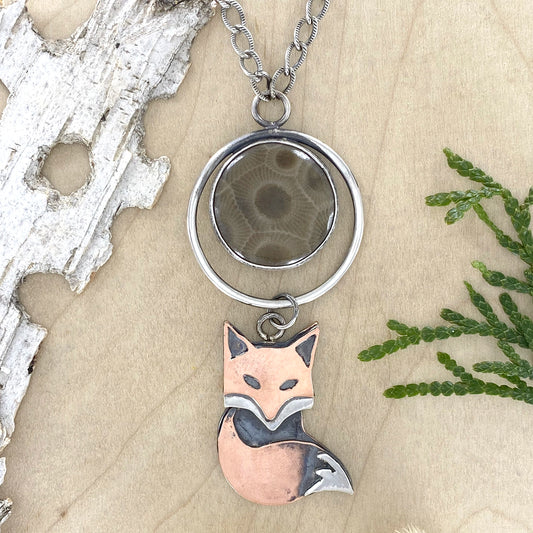
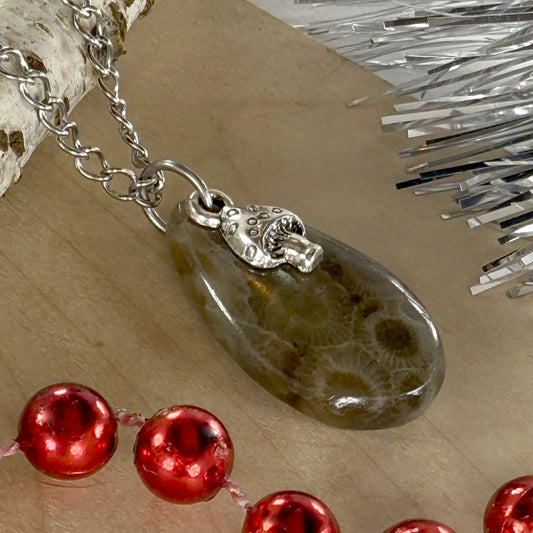
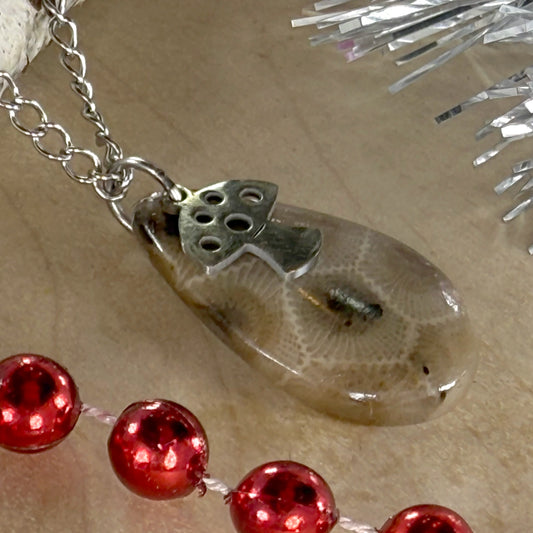
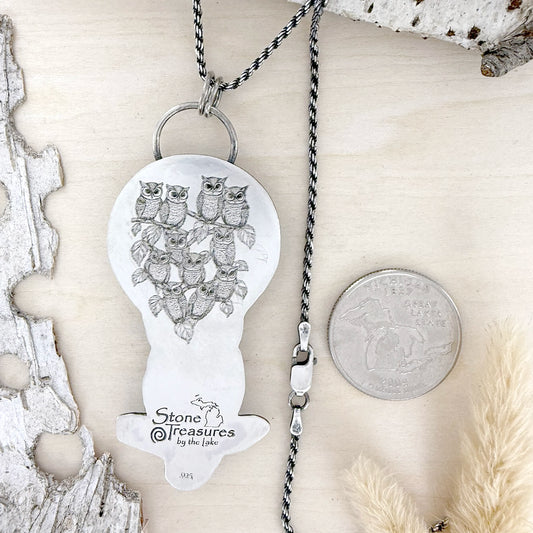
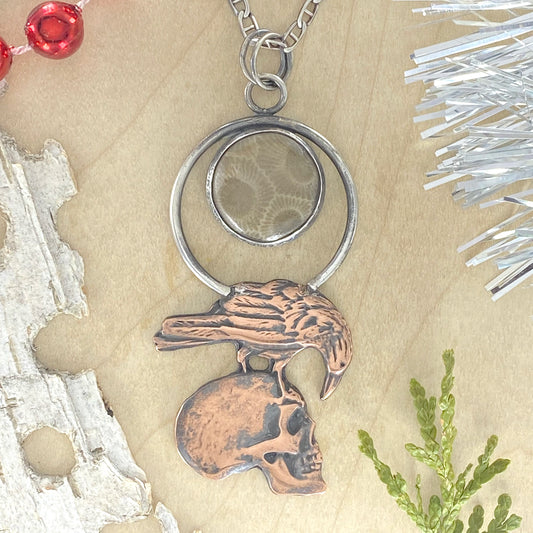
We transform genuine Michigan Petoskey stones into handcrafted jewelry and cabochons.
Each piece begins with a natural stone and is carefully selected, shaped and polished to reveal its fossil pattern.
Because natural stones vary, every finished piece has its own character.
Petoskey Stone Metaphysical Traditions
Some people who collect and wear Petoskey stone associate it with grounding, connection to nature, emotional balance and spiritual reflection.
These are traditional or personal beliefs rather than scientifically established properties.
If you enjoy the metaphysical side of stones, Petoskey stone can be appreciated as a meaningful symbol of Michigan, nature and connection to the Great Lakes.
Frequently Asked Questions
Is Petoskey stone a fossil?
Yes. Petoskey stones are fossilized remains of ancient colonial coral from the Devonian Period.
How old are Petoskey stones?
They formed roughly 350 million years ago during the Devonian Period.
Is Petoskey stone Michigan's state stone?
Yes. Michigan designated Petoskey stone as its official state stone in 1965.
Where are Petoskey stones found?
They are especially associated with northern Michigan and can be found along portions of the Great Lakes shorelines and in other areas where glacial deposits occur.
Can Petoskey stones be polished?
Yes. Polishing can dramatically enhance the contrast and reveal the fossilized coral pattern.
Why does my Petoskey stone look different from another one?
Because each stone is a natural fossil with its own history of formation, weathering and polishing. No two pieces have exactly the same pattern.
What is the difference between a Petoskey stone and a Charlevoix stone?
Both are fossil corals found in Michigan, but their fossil structures and patterns differ. Charlevoix stones generally have smaller, more tightly packed structures.
A Little Piece of Michigan's Ancient Past
A Petoskey stone may fit comfortably in the palm of your hand, but its story stretches back hundreds of millions of years.
Ancient tropical seas.
Coral reefs.
Geological upheaval.
Massive glaciers.
The Great Lakes.
And finally, a stone resting on a Michigan beach waiting to be discovered.
That's what makes Petoskey stone so special.
It's not just a stone. It's a piece of Michigan's ancient history.
Discover the Petoskey Stone Collection
Handcrafted in Northern Michigan by Stone Treasures by the Lake.